Durood Awwal Aakhir: Arabic Text, Transliteration, Meaning and Benefits
Durood Awwal Aakhir: Arabic Text, Transliteration, Meaning and Benefits
Download Durood Awwal Aakhir.pdf
Durood Awwal Aakhir is a form of sending blessings and peace upon Prophet Muhammad ﷺ. Muslims recite Durood as an expression of love, respect and devotion to the Prophet. The version presented in this article follows the Arabic text provided for Durood Awwal Aakhir.
If you are looking for its Arabic wording, English transliteration, meaning and guidance on recitation, this article will help you understand the text and its place in daily worship.
Durood Awwal Aakhir in Arabic
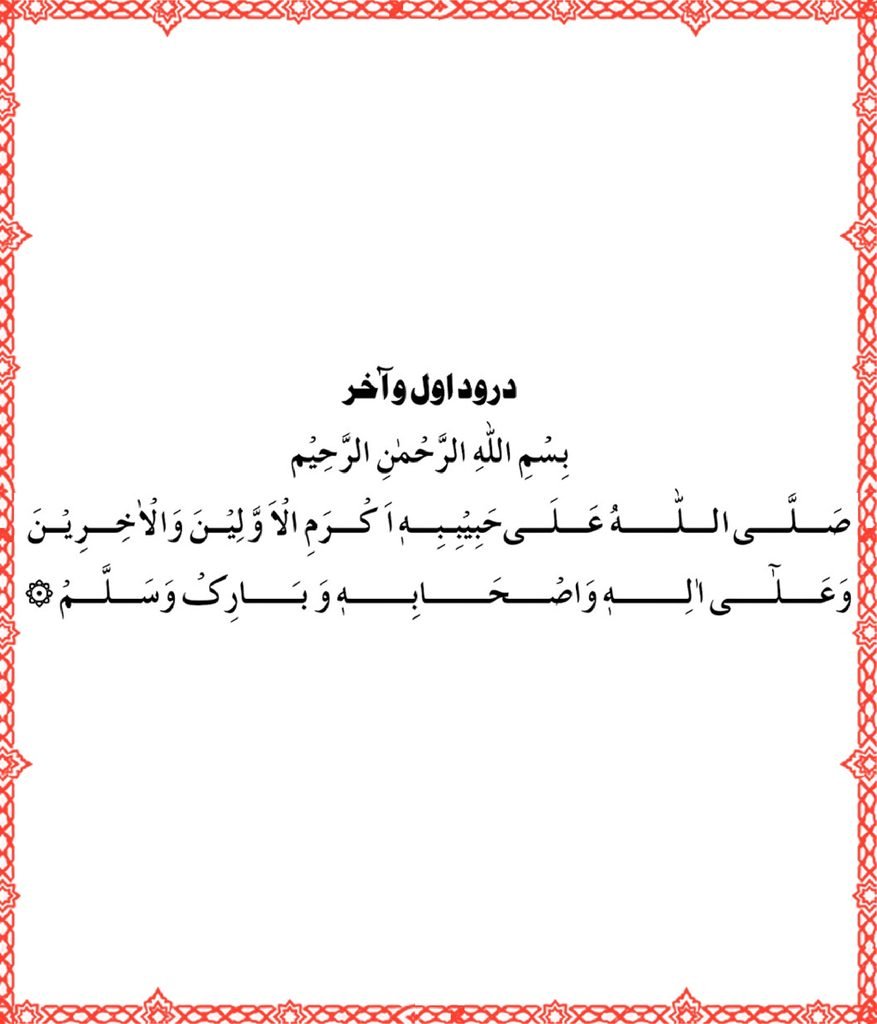
The following is the Arabic text shown in the supplied PDF.
بِسْمِ اللَّهِ الرَّحْمَٰنِ الرَّحِيمِ
صَلَّى اللَّهُ عَلَى حَبِيبِهِ أَكْرَمِ الْأَوَّلِينَ وَالْآخِرِينَ وَعَلَى آلِهِ وَأَصْحَابِهِ وَبَارَكَ وَسَلَّمَ
Durood Awwal Aakhir Transliteration in English
Bismillahir Rahmanir Raheem.
Sallallahu ala habibihi akramil awwaleena wal aakhireen, wa ala aalihi wa ashabihi wa barika wa sallim.
Transliteration can vary slightly between publications. If you are learning to recite this Durood, listening to a qualified Arabic reader can help with pronunciation and the correct articulation of the words.
Durood Awwal Aakhir Meaning in English
The meaning of the Durood is approximately:
“May Allah send blessings upon His beloved, the most noble of the earlier and the later people, and upon his family and companions, and grant blessings and peace.”
The opening phrase, Bismillahir Rahmanir Raheem, means “In the name of Allah, the Most Compassionate, the Most Merciful.”
The main Durood expresses blessings upon Prophet Muhammad ﷺ, his family and his companions. It is a reminder of the respect Muslims hold for the Prophet and the importance of sending blessings upon him.
What Is the Purpose of Reciting Durood Awwal Aakhir?
The purpose of reciting Durood is to send blessings upon Prophet Muhammad ﷺ and express love for him. Muslims include Durood in their personal worship, daily remembrance and other devotional practices.
Durood Awwal Aakhir can be learned and recited as part of a personal routine of remembrance. However, the specific wording of this Durood should be distinguished from the forms of Durood established through authentic hadith.
For another well-known form, you can read our guide to Durood e Ibrahimi, which includes the widely taught wording recited during Salah.
Benefits of Reciting Durood Awwal Aakhir
Sending blessings upon Prophet Muhammad ﷺ is an important practice in Islam. The Quran instructs believers to send blessings and peace upon the Prophet in Surah Al-Ahzab, verse 56.
Some general benefits associated with sending Durood include:
- Following an Islamic teaching: Sending blessings upon the Prophet is commanded in the Quran.
- Expressing love for the Prophet: Durood helps Muslims remember their connection with Prophet Muhammad ﷺ and his teachings.
- Supporting regular remembrance: Reciting Durood can become part of a consistent routine of worship.
- Encouraging reflection: Taking time to recite and understand its meaning can help a person reflect on faith and devotion.
These are general benefits of sending blessings upon the Prophet. They should not be taken as proof that this particular wording guarantees a specific worldly result or a particular reward beyond what reliable Islamic sources establish.
How Many Times Should You Recite Durood Awwal Aakhir?
There is no fixed recitation count stated in the supplied PDF. Therefore, it would not be appropriate to claim that this version must be recited a particular number of times without a reliable source.
You may include Durood in your regular devotional routine according to your ability. If you have heard a specific count associated with Durood Awwal Aakhir, check whether it is supported by a reliable Islamic reference before treating it as a religious requirement.
The important point is to approach recitation with sincerity and respect rather than assuming that a particular number is compulsory.
When Can You Recite Durood Awwal Aakhir?
You can send blessings upon Prophet Muhammad ﷺ during personal remembrance and at other appropriate times. Muslims also commonly send Durood on Fridays, following the teachings concerning blessings upon the Prophet.
If you are building a regular routine, choose a time that allows you to recite calmly and understand the words. You can also explore other forms of Durood, such as Durood e Taaj and Durood e Tunajjina, while checking the wording and religious claims associated with each one.
Frequently Asked Questions About Durood Awwal Aakhir
1. What is Durood Awwal Aakhir?
Durood Awwal Aakhir is a form of sending blessings and peace upon Prophet Muhammad ﷺ. The version covered here is based on the Arabic text supplied for this article.
2. Can I read Durood Awwal Aakhir in English transliteration?
Yes, transliteration can help beginners learn the pronunciation. However, it is best to learn the Arabic text and pronunciation with the help of a knowledgeable teacher whenever possible.
3. Is there a fixed number for reciting Durood Awwal Aakhir?
The supplied text does not mention a fixed count. A specific number should not be presented as compulsory or as a source of guaranteed benefits without reliable evidence.
4. What is the meaning of Durood Awwal Aakhir?
Its wording asks for blessings upon Allah’s beloved, Prophet Muhammad ﷺ, and upon his family and companions, while asking for blessings and peace.
5. Is Durood Awwal Aakhir the same as Durood e Ibrahimi?
They are different wordings. Durood e Ibrahimi is a well-known form taught in connection with Salah, while the wording in this article is the version supplied for Durood Awwal Aakhir.
Conclusion
Durood Awwal Aakhir is a devotional wording that expresses blessings and peace upon Prophet Muhammad ﷺ, his family and his companions. Learning its Arabic text, understanding its meaning and reciting it with sincerity can help you approach this practice with greater awareness.
Use the supplied wording as your reference, and consult reliable Islamic sources when checking claims about special recitation counts or specific rewards. Above all, let your recitation reflect respect for the Prophet and a sincere commitment to Islamic teachings.