Durood e Nabi: Arabic Text, English Translation and Transliteration
Durood e Nabi: Arabic Text, English Translation and Transliteration
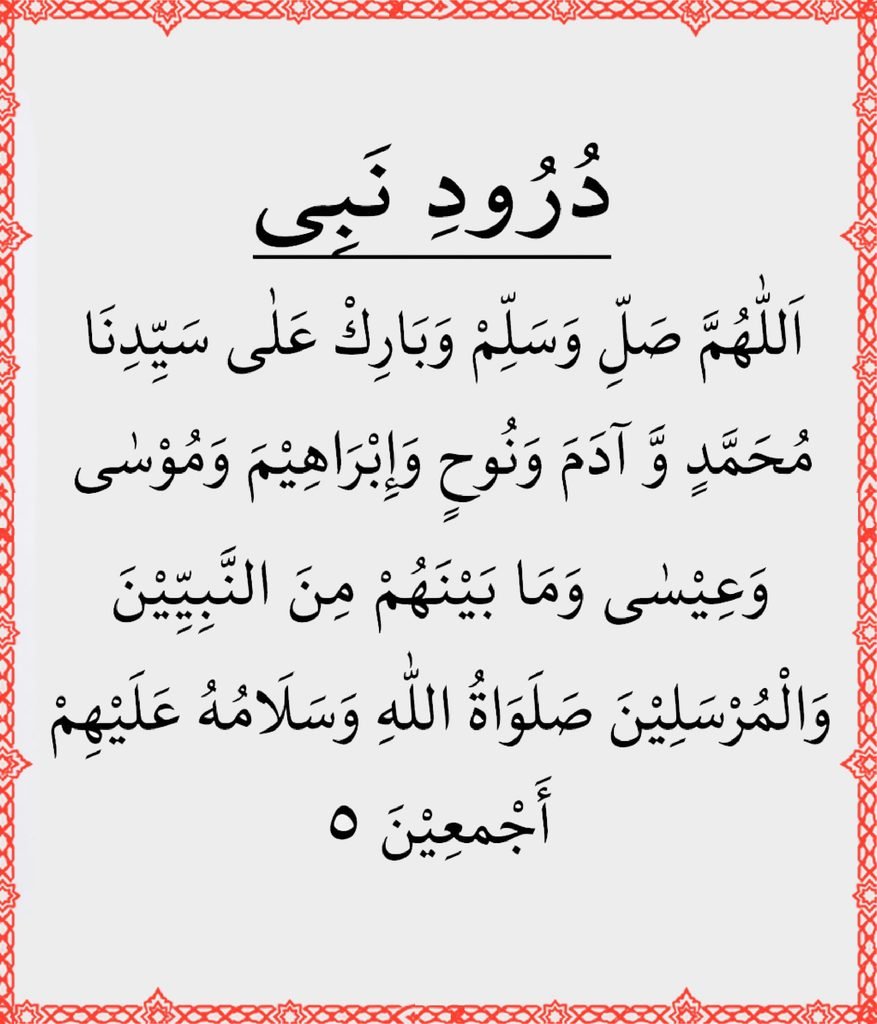
Durood e Nabi is a devotional prayer asking Allah to send blessings, peace, and barakah upon Prophet Muhammad ﷺ and mentioning several other prophets. The wording includes Adam, Noah, Abraham, Moses, Jesus, and the prophets and messengers between them.
Many readers search for Durood e Nabi in Arabic, its English translation, and its transliteration to understand the prayer and learn how to read it. In this guide, you will find the Arabic text shown in the supplied image, an English pronunciation guide, its translation, and an explanation of its meaning.
Durood e Nabi Arabic Text
اللَّهُمَّ صَلِّ وَسَلِّمْ وَبَارِكْ عَلَى سَيِّدِنَا مُحَمَّدٍ وَآدَمَ وَنُوحٍ وَإِبْرَاهِيمَ وَمُوسَى وَعِيسَى وَمَا بَيْنَهُمْ مِنَ النَّبِيِّينَ وَالْمُرْسَلِينَ صَلَوَاتُ اللَّهِ وَسَلَامُهُ عَلَيْهِمْ أَجْمَعِينَ
Durood e Nabi Transliteration in English
Allahumma salli wa sallim wa barik ‘ala sayyidina Muhammadin wa Adama wa Nuhin wa Ibrahima wa Musa wa ‘Isa wa ma baynahum minan-nabiyyina wal-mursalin. Salawatullahi wa salamuhu ‘alayhim ajma’in.
Simple Pronunciation Guide
Read the prayer slowly, one phrase at a time. Pay attention to the names of the prophets and the final phrase, Salawatullahi wa salamuhu ‘alayhim ajma’in.
English transliteration is a pronunciation aid rather than an exact representation of every Arabic sound. For accurate pronunciation, read the Arabic text alongside the transliteration or seek help from a knowledgeable Arabic reader.
Durood e Nabi English Translation
The following is an English translation of the wording shown in the supplied image:
“O Allah, send blessings, peace, and barakah upon our master Muhammad, Adam, Noah, Abraham, Moses, Jesus, and the prophets and messengers between them. May Allah’s blessings and peace be upon them all.”
This translation conveys the general meaning of the prayer. The final phrase extends the invocation of blessings and peace to all those mentioned.
Understanding the Meaning of Durood e Nabi
Understanding the words of Durood e Nabi can help readers appreciate the prayer and its references to the prophets.
Allahumma salli: This means “O Allah, send blessings.” It begins the supplication by asking Allah to bestow blessings.
Wa sallim wa barik: These words ask for peace and blessings. Together, the opening phrase requests blessings, peace, and barakah.
Sayyidina Muhammad: This means “our master Muhammad.” It is an expression of respect for Prophet Muhammad ﷺ.
Wa Adama wa Nuhin wa Ibrahima wa Musa wa ‘Isa: These words mention Adam, Noah, Abraham, Moses, and Jesus, peace be upon them.
Wa ma baynahum minan-nabiyyina wal-mursalin: This means “and the prophets and messengers between them.” It extends the wording to the prophets and messengers mentioned in the prayer.
Salawatullahi wa salamuhu ‘alayhim ajma’in: This means “May Allah’s blessings and peace be upon them all.”
Together, these phrases form a supplication asking Allah to send blessings and peace upon the named prophets and the other prophets and messengers included in the wording.
How to Read Durood e Nabi
If you are learning Durood e Nabi, take your time with the Arabic text and its meaning. Dividing the prayer into smaller parts can make it easier to read and remember.
Follow these simple steps:
- Read the Arabic text slowly.
- Use the English transliteration as a pronunciation guide.
- Review the translation to understand the prayer.
- Practise unfamiliar names and phrases separately.
- Ask a knowledgeable Arabic reader for help if you are unsure about pronunciation.
Reading the translation alongside the Arabic can help you understand the prayer instead of focusing only on memorisation.
This guide does not prescribe a particular time or a fixed number of repetitions.
Benefits and Source Notes
Sending blessings upon Prophet Muhammad ﷺ is an important devotional practice in Islam. Muslims recite Durood Sharif to express love and respect for the Prophet ﷺ and to ask Allah to send blessings upon him.
Durood e Nabi also mentions other prophets and messengers, making their inclusion an important part of the wording shown in this prayer.
However, claims about special rewards, guaranteed outcomes, or prescribed recitation counts require reliable religious evidence. A devotional prayer appearing in an online collection does not, by itself, establish that its exact wording is an authenticated Hadith.
The wording presented here follows the supplied image and corresponds to a version published in online Durood collections. Readers who want to verify its historical source or specific religious merits should consult reliable Islamic scholarship.
Frequently Asked Questions
What is Durood e Nabi?
Durood e Nabi is a devotional prayer asking Allah to send blessings, peace, and barakah upon Prophet Muhammad ﷺ. The version shown here also mentions Adam, Noah, Abraham, Moses, Jesus, and other prophets and messengers.
What is the English translation of Durood e Nabi?
The translation asks Allah to send blessings, peace, and barakah upon the named prophets and messengers, ending with a request for Allah’s blessings and peace upon them all.
How can I pronounce Durood e Nabi correctly?
Read the Arabic wording alongside the English transliteration. For accurate pronunciation, practise with a knowledgeable Arabic reader because English letters cannot represent every Arabic sound perfectly.
Does Durood e Nabi mention other prophets?
Yes. The wording shown in this article names Adam, Noah, Abraham, Moses, and Jesus, peace be upon them, and mentions the other prophets and messengers between them.
Does Durood e Nabi have a fixed recitation count?
This article does not establish a prescribed number of repetitions. Any claim that a particular count is required or guarantees a special reward should be verified through reliable Islamic references.
Is Durood e Nabi an authenticated Hadith?
This article presents the wording as a devotional formula, not as a verified Hadith. Its exact attribution and any specific virtues should be checked against reliable Islamic sources before being described as authenticated.