Durood e Malvan: A Salawat Remembering the Passing of Time
Durood e Malvan: A Salawat Remembering the Passing of Time
Durood e Malvan has a distinctive message: it asks Allah to send blessings upon Prophet Muhammad ﷺ through words that refer to the changing of days, the passing of time, and the movement of the heavenly stars. Its wording gives this Salawat a connection with continuity and remembrance.
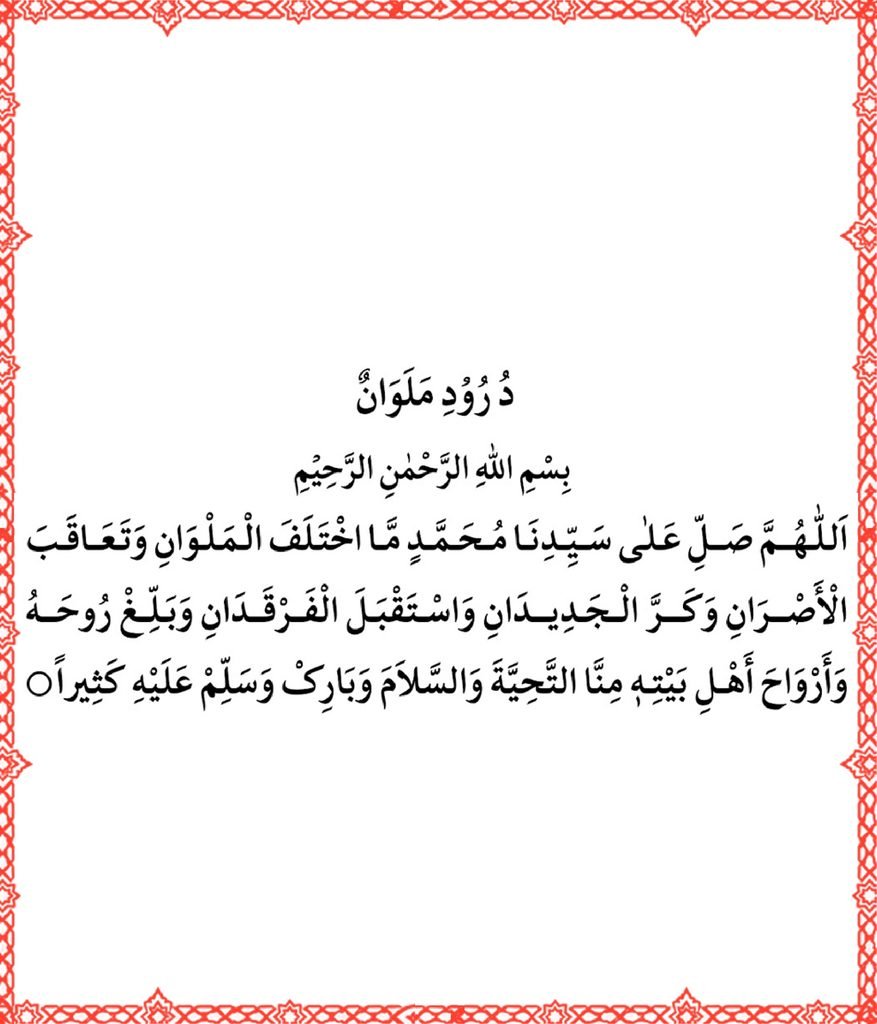
The phrase Durood e Malvan is the name shown in your supplied image. Below, I have kept the Arabic wording based on that image and focused the article on its references to time and the lasting remembrance of the Prophet ﷺ.
Durood e Malvan in Arabic
بِسْمِ اللَّهِ الرَّحْمَٰنِ الرَّحِيمِ
اللَّهُمَّ صَلِّ عَلَى سَيِّدِنَا مُحَمَّدٍ مَا اخْتَلَفَ الْمَلَوَانِ وَتَعَاقَبَ الْعَصْرَانِ وَكَرَّرَ الْجَدِيدَانِ وَاسْتَقْبَلَ الْفَرْقَدَانِ وَبَلَغَ رُوحَهُ وَأَرْوَاحَ أَهْلِ بَيْتِهِ مِنَّا التَّحِيَّةَ وَالسَّلَامَ وَبَارِكْ وَسَلِّمْ عَلَيْهِ كَثِيرًا
Transcription note: The Arabic is reproduced from your image. Some words in ornate script can be difficult to distinguish, so please compare the text with your original copy before publication.
Transliteration of Durood e Malvan
Allahumma salli ‘ala Sayyidina Muhammadin ma ikhtalafa al-malawani wa ta’aqaba al-‘asrani wa karrara al-jadidani wastaqbala al-farqadani, wa balagha ruhahu wa arwaha ahli baytihi minna at-tahiyyata was-salama, wa barik wa sallim ‘alayhi kathira.
English Meaning of Durood e Malvan
A careful, approximate rendering of the wording is:
“O Allah, send blessings upon our master Muhammad for as long as the two alternating periods continue, the days and nights follow one another, the new cycles return, and the two stars approach; and convey our greetings and peace to his soul and the souls of his family. Send abundant blessings and peace upon him.”
The expressions about time and the stars are poetic. Their purpose in the wording is to evoke continuity and repeated cycles rather than to give a literal timetable.
The Meaning Behind Its References to Time
One of the most noticeable features of Durood e Malvan is that it does not simply ask for blessings upon the Prophet ﷺ. It uses several expressions associated with the passage of time. These phrases give the Salawat its own character.
1. The Changing of Days and Nights
The wording refers to things that alternate and continue. Day follows night, and night follows day. This familiar pattern reminds the reader that time keeps moving and that remembrance can remain part of everyday life.
2. The Repetition of Time’s Cycles
The Durood also refers to recurring cycles and the return of new days. These expressions create a sense of continuity. They encourage a believer to remember the Prophet ﷺ regularly rather than only on special occasions.
3. The Mention of the Stars
The reference to Al-Farqadan gives the wording a connection with the night sky. It is a poetic expression within the Durood, adding to its imagery of time and the heavens.
4. Sending Greetings to the Prophet’s Family
The text asks Allah to convey greetings and peace to the soul of the Prophet ﷺ and the souls of his family. This part of the wording is important because the supplication includes his family as well.
Why Do Muslims Recite Durood?
Sending blessings upon Prophet Muhammad ﷺ is an established Islamic act of worship. The Quran instructs believers to send blessings and peace upon him in Surah Al-Ahzab (33:56).
Durood reminds Muslims of the Messenger of Allah, his teachings, and the guidance he brought. It can also encourage believers to reflect on his character and try to follow his example in daily life.
When Can You Recite Durood e Malvan?
You can include Durood e Malvan in your personal routine of sending blessings upon the Prophet ﷺ. Some people prefer to set aside a quiet time after prayer, while others recite Salawat during moments of reflection throughout the day.
The supplied wording does not specify a required time. If you follow a particular devotional schedule, check its source with a knowledgeable scholar rather than assuming that one timing is compulsory.
Is There a Fixed Number for Durood e Malvan?
The image you provided does not mention a fixed recitation count. For that reason, a specific number should not be presented as obligatory or as a guaranteed means of receiving a particular result.
You may recite it according to your personal routine. Give attention to the Arabic wording, its meaning, and the sincerity of your intention.
Frequently Asked Questions About Durood e Malvan
What is Durood e Malvan?
Durood e Malvan is a Salawat whose wording asks Allah to send blessings upon Prophet Muhammad ﷺ and refers poetically to the continuing cycles of time and the heavens.
What is the main theme of Durood e Malvan?
Its distinctive theme is continuity. The wording uses references to alternating periods, recurring days, and stars while asking for blessings and peace upon the Prophet ﷺ.
Does Durood e Malvan include the Prophet’s family?
Yes. The supplied Arabic includes a request for greetings and peace to reach the souls of the Prophet’s family as well.
What is the meaning of Al-Farqadan?
Al-Farqadan is a name used for a pair of stars. In this Durood, the expression contributes to its poetic references to the heavens.
How many times should Durood e Malvan be recited?
The supplied text does not state a fixed number. Avoid treating an unsupported count as a religious requirement.
Can I recite Durood e Malvan daily?
You may include it in your daily Salawat routine. Recite carefully and remember that sending blessings upon the Prophet ﷺ should be accompanied by learning and following his teachings.
Conclusion
Durood e Malvan stands out for its poetic references to the passage of time, recurring days, and the stars. Through these expressions, it asks Allah to send blessings upon Prophet Muhammad ﷺ and convey greetings and peace to him and his family.
Understanding these words can make recitation more meaningful. Along with reading Durood, Muslims can strengthen their connection with the Prophet ﷺ by learning about his life and putting his teachings into practice.