Durood e Ghosia: Arabic Text, English Translation and Transliteration
Download Durood-e-Hazarah .pdf
Durood e Ghosia is a devotional prayer asking Allah to send blessings upon Prophet Muhammad ﷺ and his family. The wording describes the Prophet ﷺ as Ma’din al-Jud wal-Karam, an expression meaning the source of generosity and nobility.
Many readers search for Durood e Ghosia in Arabic, its English translation, and its transliteration to understand the prayer and learn how to read it. This guide follows the short version shown in the supplied PDF, with a simple explanation of its meaning and pronunciation.
Durood e Ghosia Arabic Text
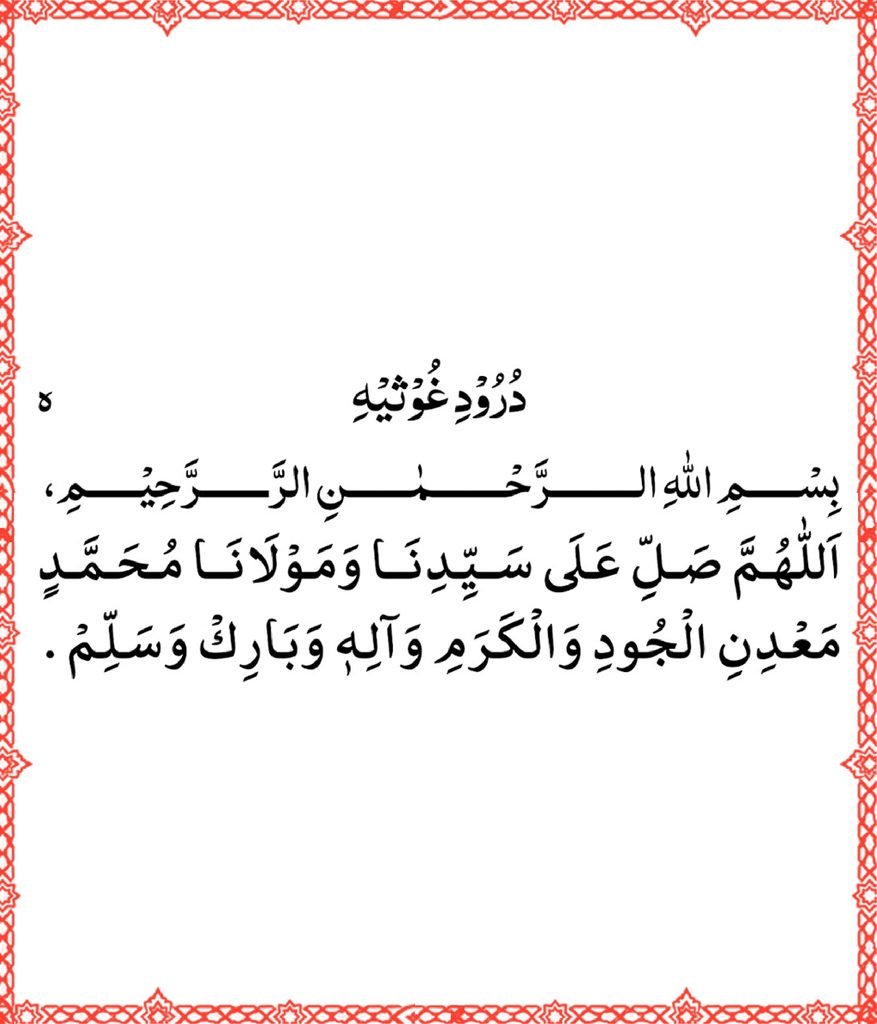
بِسْمِ اللَّهِ الرَّحْمَٰنِ الرَّحِيمِ
اللَّهُمَّ صَلِّ عَلَى سَيِّدِنَا وَمَوْلَانَا مُحَمَّدٍ مَعْدَنِ الْجُودِ وَالْكَرَمِ وَآلِهِ وَبَارِكْ وَسَلِّمْ
Durood e Ghosia Transliteration in English
Bismillahir Rahmanir Raheem.
Allahumma salli ‘ala Sayyidina wa Mawlana Muhammadin, ma’dinil-judi wal-karami, wa alihi, wa barik wa sallim.
Simple Pronunciation Guide
Read the prayer slowly and divide it into shorter phrases:
- Bismillahir Rahmanir Raheem: In the name of Allah, the Most Compassionate, the Most Merciful.
- Allahumma salli: O Allah, send blessings.
- Ala Sayyidina wa Mawlana Muhammad: Upon our master and patron Muhammad.
- Ma’dinil Judi wal Karam: The source of generosity and nobility.
- Wa alihi: And upon his family.
- Wa barik wa sallim: And grant blessings and peace.
English transliteration is a reading aid, not an exact representation of every Arabic sound. For accurate pronunciation, read alongside the Arabic text or seek help from a knowledgeable Arabic reader.
Durood e Ghosia English Translation
The following is an approximate English translation of the wording shown in your PDF:
“In the name of Allah, the Most Compassionate, the Most Merciful.
O Allah, send blessings upon our master and patron Muhammad, the source of generosity and nobility, and upon his family; bless him and grant peace.”
This translation conveys the general meaning of the prayer. The phrase Ma’din al-Jud wal-Karam is an expression of praise that describes generosity and noble kindness.
Understanding the Meaning of Durood e Ghosia
Understanding the individual phrases in Durood e Ghosia can help readers appreciate the prayer and its devotional purpose.
Bismillahir Rahmanir Raheem: This means “In the name of Allah, the Most Compassionate, the Most Merciful.” It is the opening phrase shown in the supplied image.
Allahumma salli: This means “O Allah, send blessings.” It begins the supplication by asking Allah to bestow blessings.
Sayyidina wa Mawlana Muhammad: This means “our master and patron Muhammad.” It expresses respect for Prophet Muhammad ﷺ.
Ma’din al-Jud wal-Karam: This phrase means “the source of generosity and nobility.” It is a descriptive expression of praise for the Prophet ﷺ.
Wa alihi: This means “and upon his family.” The prayer includes the Prophet’s family in the supplication.
Wa barik wa sallim: These words ask for blessings and peace. They complete the prayer with a further supplication.
Together, these phrases form a short devotional prayer asking Allah to send blessings upon Prophet Muhammad ﷺ, include his family, and grant blessings and peace.
Reciting Durood e Ghosia
If you are learning Durood e Ghosia, take time to become familiar with its Arabic wording and English meaning. Its short form can be practised phrase by phrase.
Follow these simple steps:
- Read the Arabic text carefully.
- Use the English transliteration as a pronunciation guide.
- Review the English translation to understand the words.
- Practise unfamiliar Arabic sounds slowly.
- Ask a knowledgeable Arabic reader for help if needed.
Understanding the meaning can make recitation more thoughtful. Avoid rushing through the words simply to memorise them.
This guide does not prescribe a particular time or a fixed number of repetitions.
Benefits and Source Notes
Sending blessings upon Prophet Muhammad ﷺ is an important devotional practice in Islam. Muslims recite Durood Sharif to express love and respect for the Prophet ﷺ and ask Allah to bestow blessings upon him.
Durood e Ghosia contains an expression of praise associated with generosity and nobility. Reading its translation can help readers understand the wording and reflect on its devotional meaning.
However, claims about guaranteed outcomes, special rewards, or prescribed recitation counts require reliable religious evidence. Such claims should not automatically be presented as authenticated Hadith.
The Arabic wording in this article follows the short version shown in your PDF. Online sources also publish this form under the name Durood e Ghosia. However, the wording’s appearance in a devotional collection does not, by itself, establish that it is an authenticated Hadith or prove a particular reward for reciting it.
Readers who want to verify its source or specific religious merits should consult reliable Islamic scholarship.
Frequently Asked Questions
What is Durood e Ghosia?
Durood e Ghosia is a devotional prayer asking Allah to send blessings upon Prophet Muhammad ﷺ and his family. The wording in this article praises the Prophet ﷺ through the expression “the source of generosity and nobility.”
What is the English translation of Durood e Ghosia?
Its approximate meaning is a request for Allah to send blessings upon our master and patron Muhammad, the source of generosity and nobility, and upon his family, while asking for blessings and peace.
What does Ma’din al-Jud wal-Karam mean?
The phrase means “the source of generosity and nobility.” It is a descriptive expression of praise used in this devotional prayer.
How can I pronounce Durood e Ghosia correctly?
Read the Arabic text alongside the English transliteration. For more accurate pronunciation, seek guidance from a knowledgeable Arabic reader because English letters cannot represent every Arabic sound perfectly.
Does Durood e Ghosia have a fixed recitation count?
This article does not prescribe a particular number of repetitions. Any claim that a certain count guarantees a specific religious reward should be checked against reliable Islamic references.
Are there different versions of Durood e Ghosia?
Yes. Longer texts are also published under the name Durood e Ghosia. This article follows the short wording in your supplied PDF, so it is important to compare the Arabic text carefully when using another source.
Is Durood e Ghosia an authenticated Hadith?
This article presents the wording as a devotional prayer, not as a verified Hadith. Its exact attribution and any claimed special virtues should be checked against reliable Islamic sources before being described as authenticated.