Durood e Davami: The Meaning of Everlasting Salawat and Its Message
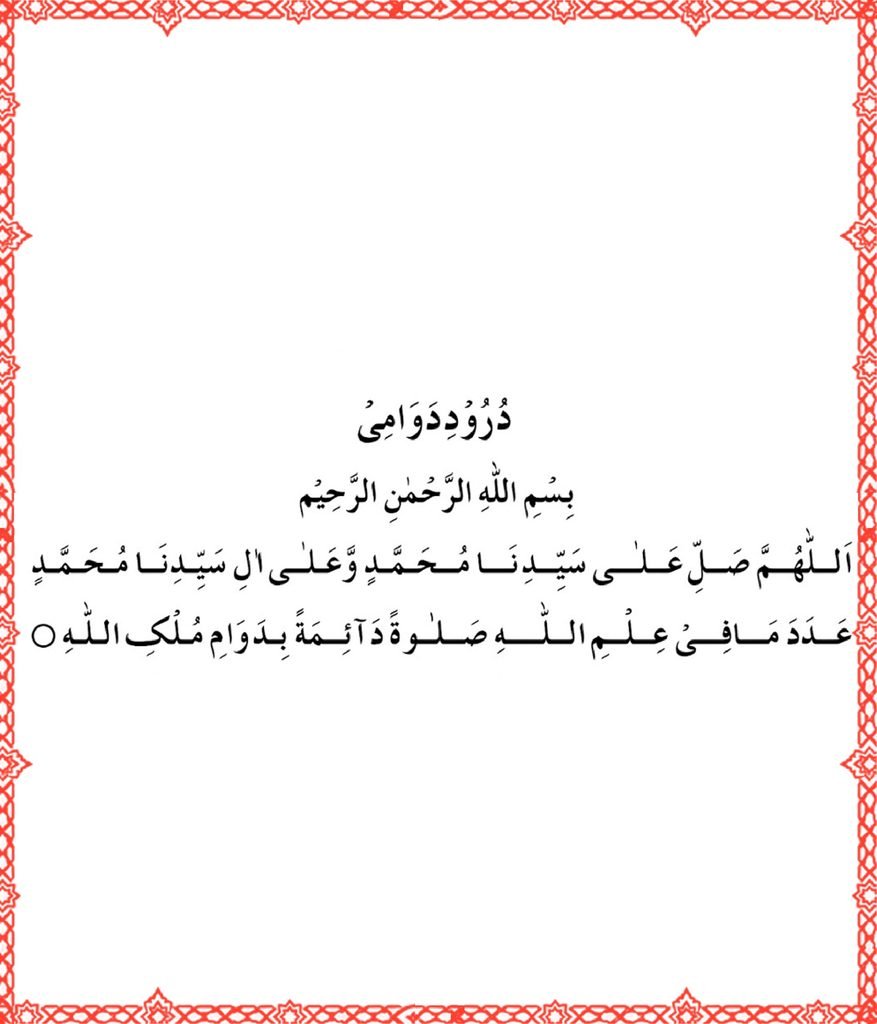
Durood e Davami is a short but meaningful form of sending blessings upon Prophet Muhammad ﷺ. Its wording carries an important idea: asking Allah to send blessings upon the Prophet ﷺ and his family in a manner that is lasting and continuous. The word Davami is associated with permanence, while the final part of the recitation refers to the everlasting dominion of Allah.
For Muslims who want to include Salawat in their daily remembrance, understanding the meaning of each phrase can make the recitation more thoughtful. Here is the Arabic text, transliteration, English meaning, and an explanation of its central message.
Durood e Davami in Arabic
بِسْمِ اللَّهِ الرَّحْمَٰنِ الرَّحِيمِ
اللَّهُمَّ صَلِّ عَلَى سَيِّدِنَا مُحَمَّدٍ وَعَلَى آلِ سَيِّدِنَا مُحَمَّدٍ عَدَدَ مَا فِي عِلْمِ اللَّهِ صَلَاةً دَائِمَةً بِدَوَامِ مُلْكِ اللَّهِ
Please compare the Arabic above with your original image before publishing to ensure the spelling and diacritical marks match your preferred copy.
Durood e Davami Transliteration
Bismillahir Rahmanir Raheem.
Allahumma salli ‘ala Sayyidina Muhammadin wa ‘ala aali Sayyidina Muhammadin, ‘adada ma fi ‘ilmillahi, salatan da’imatan bi-dawami mulkillah.
English Meaning of Durood e Davami
A simple English rendering of this Durood is:
“O Allah, send blessings upon our master Muhammad and upon the family of our master Muhammad, as numerous as what is within the knowledge of Allah, with everlasting blessings that continue for as long as the dominion of Allah continues.”
The translation is intended to explain the meaning of the Arabic wording rather than serve as a word-for-word scholarly translation.
What Makes the Wording of Durood e Davami Special?
The most distinctive part of this recitation is its reference to lasting blessings. It does not simply ask for Salawat upon Prophet Muhammad ﷺ; it also uses expressions that point towards an immeasurable number and continuous duration.
The phrase “adada ma fi ‘ilmillah” refers to the number of what is within Allah’s knowledge. It reminds the reader that Allah’s knowledge is beyond human calculation. The wording therefore expresses a very vast meaning rather than giving a limited numerical amount.
The phrase “salatan da’imatan” means lasting or continuous blessings. It brings attention to the idea of permanence, while “bi-dawami mulkillah” connects that continuity with the everlasting dominion of Allah.
Together, these expressions give Durood e Davami its distinctive character.
Why Do Muslims Recite Durood e Davami?
Sending blessings upon Prophet Muhammad ﷺ is an important act of worship in Islam. The Quran instructs believers to send blessings and peace upon the Prophet in Surah Al-Ahzab (33:56).
Durood e Davami is one form of wording used for this purpose. A person may choose to recite it as part of personal remembrance, while reflecting on its meaning and maintaining respect for the Prophet ﷺ.
Its wording can also encourage a person to think beyond numbers. Rather than focusing only on how many times a Durood is read, the reader can pay attention to sincerity, consistency, and understanding.
Is There a Fixed Recitation Count for Durood e Davami?
The Arabic text provided for Durood e Davami does not mention a specific number of repetitions. Therefore, a fixed count should not be presented as compulsory or as a guaranteed condition for receiving a particular result without a reliable religious source.
A Muslim can recite Durood according to a personal daily routine or follow a count recommended by a trusted scholar when there is a sound reference for it. The important point is to avoid treating an unsupported number as an established religious requirement.
How to Include Durood e Davami in Daily Remembrance
You can make this recitation part of a simple routine without making it unnecessarily complicated.
- Choose a quiet moment when you can concentrate.
- Read the Arabic carefully and learn its pronunciation.
- Understand the meaning instead of rushing through the words.
- Recite with respect and sincerity.
- Try to remain consistent with your chosen routine.
There is no need to make promises about specific worldly results. The purpose of Salawat is to obey Allah’s instruction and express love and respect for His Messenger ﷺ.
Frequently Asked Questions
What does Durood e Davami mean?
Durood e Davami is a form of Salawat whose wording asks Allah to send blessings upon Prophet Muhammad ﷺ and his family in a lasting and continuous manner.
What is the meaning of “Davami”?
The word is connected with permanence, continuity, and something that lasts. In this Durood, it appears in the expression referring to everlasting blessings.
Can I recite Durood e Davami every day?
Yes, you may include it in your personal daily Salawat routine. Read it with sincerity and make sure you understand the wording.
Does Durood e Davami have a compulsory recitation count?
The supplied text does not specify a compulsory number. Do not assume that a particular count is obligatory unless it is supported by a reliable religious reference.
Should I understand the meaning while reciting?
Understanding the meaning is helpful because it allows you to reflect on the words and their message. You can learn the translation gradually while practising the Arabic pronunciation.
Conclusion
Durood e Davami has a distinctive message built around lasting blessings and the greatness of Allah’s knowledge and dominion. Its short wording carries a broad meaning, reminding Muslims that Salawat is not merely a repeated phrase but an expression of respect and devotion towards Prophet Muhammad ﷺ.
By learning its Arabic, pronunciation, and meaning, you can recite Durood e Davami with greater understanding and make it a meaningful part of your regular remembrance.