Durood e Batin: Understanding Its Short Salawat and Direct Address to the Prophet ﷺ
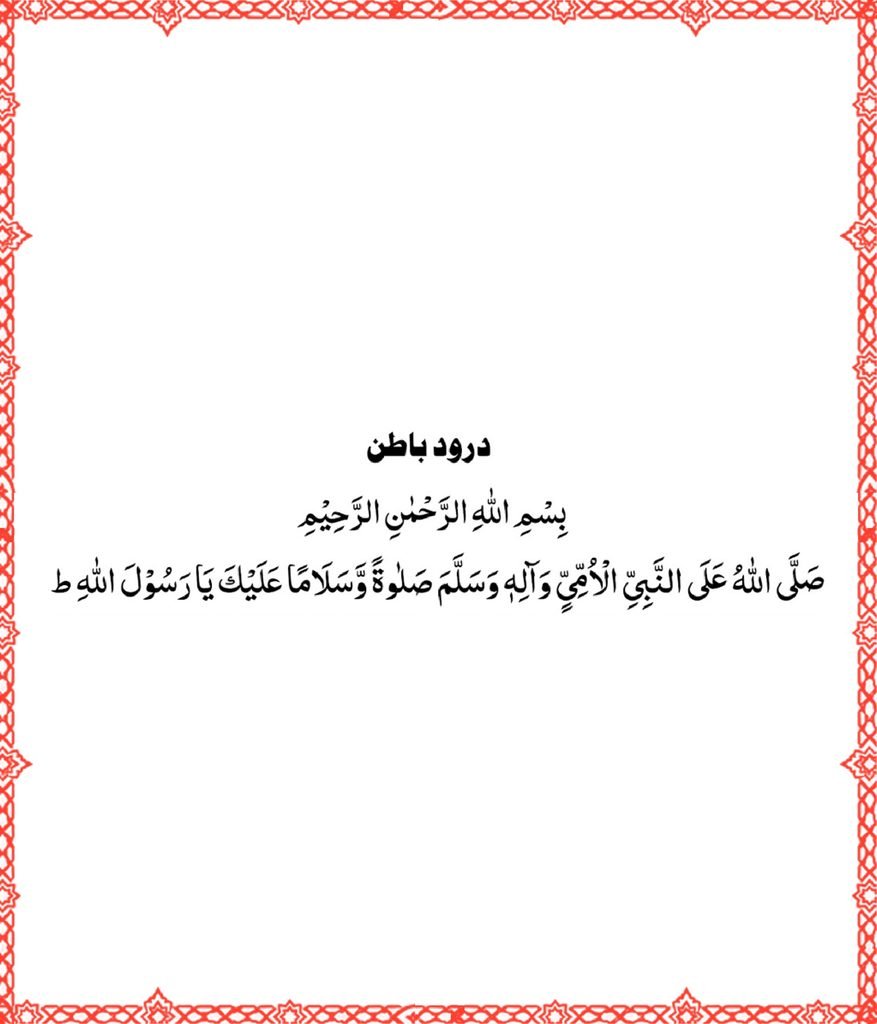
Durood e Batin is a brief form of Salawat with a simple but distinctive wording. It begins by asking Allah to send blessings upon the unlettered Prophet ﷺ and his family, then continues with a direct expression of peace addressed to the Messenger of Allah ﷺ.
Unlike longer Durood texts that contain several descriptive titles or extended supplications, the version in your image is very short. Its wording makes it useful to study as an example of concise devotional expression. This article follows the exact version shown in your supplied image.
Durood e Batin in Arabic
بِسْمِ اللَّهِ الرَّحْمَٰنِ الرَّحِيمِ
صَلَّى اللَّهُ عَلَى النَّبِيِّ الْأُمِّيِّ وَآلِهِ وَسَلَّمَ صَلَاةً وَسَلَامًا عَلَيْكَ يَا رَسُولَ اللَّهِ
The small final mark visible after the Arabic line in the image appears to be a notation rather than part of the recitation, so it has not been included in the text above.
Durood e Batin Transliteration
Bismillahir-Rahmanir-Raheem.
Sallallahu ‘alan-nabiyyil-ummiyyi wa aalihi wa sallam, salatan wa salaman ‘alayka ya Rasool Allah.
The transliteration is an approximate pronunciation guide. English letters cannot represent every Arabic sound exactly, so use the Arabic text as the primary reference when learning the recitation.
Durood e Batin Meaning in English
The wording can be translated approximately as:
“In the name of Allah, the Most Compassionate, the Most Merciful.
May Allah send blessings upon the unlettered Prophet, his family, and grant him peace. Blessings and peace be upon you, O Messenger of Allah.”
The text contains two closely connected expressions: a request for Allah’s blessings upon the Prophet ﷺ and his family, followed by a greeting of peace addressed to him.
What Makes Durood e Batin Distinctive?
The main feature of this version is its concise wording. It does not contain a long list of descriptions, requests, or references to particular worldly needs. Instead, it keeps the focus on sending blessings and peace upon the Prophet ﷺ.
1. Salawat Upon the Prophet ﷺ
The opening words, Sallallahu ‘alan-nabiyyil-ummiyyi, express the prayer that Allah send blessings upon the unlettered Prophet ﷺ. This is the central subject of the Durood.
2. Including the Prophet’s Family
The phrase wa aalihi means “and his family.” This extends the wording of the Salawat beyond the Prophet ﷺ himself and includes his family in the prayer.
3. A Direct Greeting of Peace
The closing words, ‘alayka ya Rasool Allah, mean “peace be upon you, O Messenger of Allah.” This direct form of address gives the short text its distinctive character.
Why Do Muslims Send Salawat Upon Prophet Muhammad ﷺ?
Sending blessings upon Prophet Muhammad ﷺ is an important part of Islamic worship and remembrance. Muslims include Salawat in their daily devotional practices and remember the Prophet’s teachings, character, and example.
Durood e Batin can be read within this wider practice of Salawat. Its short wording gives readers an opportunity to focus on the meaning of blessings and peace rather than concentrating only on the number of repetitions.
Some general reasons Muslims send Salawat include:
- Expressing love and respect for Prophet Muhammad ﷺ.
- Following the Islamic teaching to send blessings upon him.
- Remembering his example and teachings.
- Including the remembrance of Allah in daily life.
- Making devotional recitation more meaningful through understanding.
These are general purposes of Salawat, not special guarantees associated exclusively with this particular wording.
Is There a Fixed Recitation Count for Durood e Batin?
The image you provided does not mention a specific recitation count. Therefore, it would not be accurate to say that Durood e Batin must be read a particular number of times.
If a specific count is recommended in a devotional tradition, it is worth asking a knowledgeable religious teacher about its source. A recommended personal routine should not automatically be presented as a compulsory religious instruction.
You can include Salawat in your regular remembrance without assuming that a fixed number guarantees a particular result.
How to Read Durood e Batin With Understanding
Because this Durood is short, it is easy to focus on each part of its meaning.
Begin with the Arabic text and learn its pronunciation. Then consider the two main parts: the request for blessings upon the Prophet ﷺ and his family, and the greeting of peace addressed to the Messenger of Allah ﷺ.
Try not to rush through the words. Understanding what you are reciting can make your devotional practice more thoughtful. If you are unsure about the pronunciation of al-nabiyyil-ummiyyi or other Arabic expressions, ask someone who reads Arabic accurately to guide you.
Frequently Asked Questions About Durood e Batin
What is Durood e Batin?
Durood e Batin is a short form of Salawat that asks Allah to send blessings upon Prophet Muhammad ﷺ and his family. It also includes a direct greeting of peace to the Messenger of Allah ﷺ.
What is the meaning of Durood e Batin?
Its general meaning is a prayer for Allah’s blessings and peace upon the unlettered Prophet ﷺ and his family, followed by the words, “Peace be upon you, O Messenger of Allah.”
Is Durood e Batin a long Durood?
No. The version shown in your image is brief and consists of a single main line of Salawat after the Bismillah.
Does Durood e Batin include the Prophet’s family?
Yes. The words wa aalihi mean “and his family,” so the family of the Prophet ﷺ is included in the wording.
How many times should Durood e Batin be recited?
Your supplied image does not specify a fixed number. If you follow a particular devotional count, confirm its source with a knowledgeable scholar.
Can I include Durood e Batin in my daily routine?
You may include Salawat in your personal remembrance. Read the wording carefully and make sure you understand its meaning and pronunciation.
Conclusion
Durood e Batin is a concise form of Salawat whose message centres on blessings and peace upon Prophet Muhammad ﷺ and his family. Its closing greeting, addressed directly to the Messenger of Allah ﷺ, gives this version a distinctive devotional style.
Although the wording is short, taking time to understand it can make recitation more meaningful. Learn the Arabic pronunciation, reflect on its translation, and keep the purpose of Salawat in mind whenever you recite it.