Durood e Khamsah: Five Expressions of Sending Salawat Upon Prophet Muhammad ﷺ
Durood e Khamsah: Five Expressions of Sending Salawat Upon Prophet Muhammad ﷺ
Download Durood e Khamsah .pdf
Durood e Khamsah is a form of Salawat that expresses the desire to send blessings upon Prophet Muhammad ﷺ in different ways. Its wording repeats the request for Allah’s blessings while presenting different expressions of devotion: according to the number of those who send blessings, in the manner Allah is pleased with, as Muslims have been commanded, and in the manner befitting the Prophet ﷺ.
The distinctive feature of this Durood is its repeated prayer for blessings. Rather than focusing on a long list of titles or descriptions, it places emphasis on the value of sending Salawat upon the Messenger of Allah ﷺ.
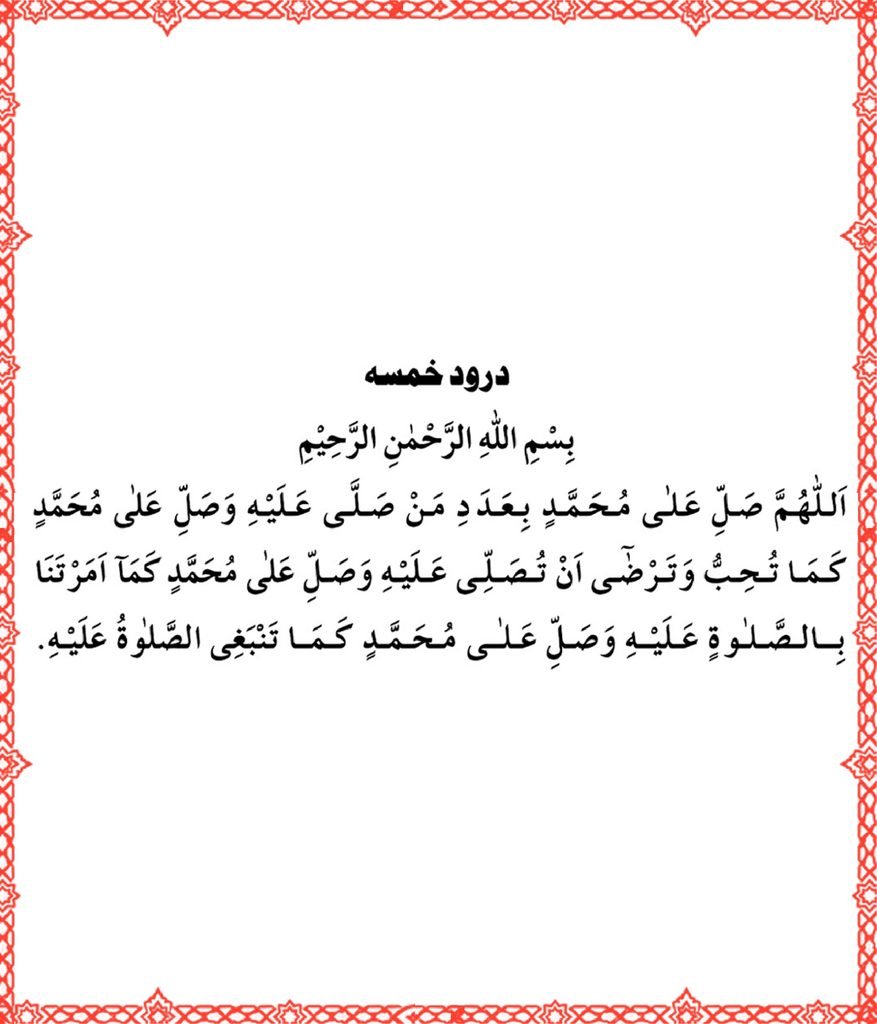
This article presents the Arabic text shown in your supplied image, along with its transliteration, approximate English meaning, and an explanation of its wording.
Durood e Khamsah in Arabic
بِسْمِ اللَّهِ الرَّحْمَٰنِ الرَّحِيمِ
اللَّهُمَّ صَلِّ عَلَى مُحَمَّدٍ بِعَدَدِ مَنْ صَلَّى عَلَيْهِ وَصَلِّ عَلَى مُحَمَّدٍ كَمَا تُحِبُّ وَتَرْضَى أَنْ تُصَلِّيَ عَلَيْهِ وَصَلِّ عَلَى مُحَمَّدٍ كَمَا أَمَرْتَنَا بِالصَّلَاةِ عَلَيْهِ وَصَلِّ عَلَى مُحَمَّدٍ كَمَا تَنْبَغِي الصَّلَاةُ عَلَيْهِ.
Durood e Khamsah Transliteration
Bismillahir-Rahmanir-Raheem.
Allahumma salli ‘ala Muhammadin bi’adadi man salla ‘alayhi, wa salli ‘ala Muhammadin kama tuhibbu wa tarda an tusalliya ‘alayhi, wa salli ‘ala Muhammadin kama amartana bis-salati ‘alayhi, wa salli ‘ala Muhammadin kama tanbaghis-salatu ‘alayhi.
This is an approximate English-letter guide to the Arabic pronunciation. For accurate recitation, use the Arabic text and seek help from someone familiar with Arabic pronunciation.
Durood e Khamsah Meaning in English
The approximate meaning of the Durood is:
“O Allah, send blessings upon Muhammad according to the number of those who have sent blessings upon him. Send blessings upon Muhammad in the manner that You love and are pleased to send blessings upon him. Send blessings upon Muhammad as You have commanded us to send blessings upon him. And send blessings upon Muhammad in the manner that is befitting for him.”
The wording is a continuous supplication asking Allah to send blessings upon Prophet Muhammad ﷺ. Each part adds a different expression to the same central prayer.
Understanding the Four Expressions in Durood e Khamsah
One of the interesting aspects of this wording is that the request for Salawat is repeated with different descriptions. Understanding these expressions helps readers appreciate the meaning instead of reciting the words without reflection.
1. Blessings According to Their Number
The opening request asks Allah to send blessings upon Prophet Muhammad ﷺ according to the number of those who have sent blessings upon him.
This expression draws attention to the many Muslims throughout the world who remember the Prophet ﷺ and send Salawat upon him. It gives the opening line a sense of abundance.
2. Blessings in the Manner Allah Loves
The next expression asks Allah to send blessings upon the Prophet ﷺ in the manner He loves and is pleased with.
It reminds the reader that the purpose of Salawat is not simply to repeat words. It is an act of devotion directed towards Allah, and the wording expresses a desire for what is pleasing to Him.
3. Blessings as Muslims Have Been Commanded
The third expression refers to the command to send blessings upon Prophet Muhammad ﷺ.
This connects the Durood with the broader Islamic teaching of Salawat. Muslims are encouraged to remember the Prophet ﷺ and send blessings upon him as part of their faith and worship.
4. Blessings in a Manner Befitting the Prophet ﷺ
The final expression asks Allah to send blessings upon Muhammad ﷺ in the manner that is appropriate for him.
It closes the supplication by returning to its central purpose: asking Allah to honour His Messenger ﷺ with blessings and peace.
Why Is Salawat an Important Part of Muslim Life?
Sending Salawat upon Prophet Muhammad ﷺ is an important Islamic practice. It is a way of expressing love, respect, and connection with the Messenger of Allah ﷺ.
The Quran instructs believers to send blessings and peace upon the Prophet ﷺ. This teaching gives Salawat a special place in Muslim devotional life.
Muslims include Durood in their daily remembrance, supplications, and gatherings. Some recite short forms, while others prefer longer versions containing additional expressions of praise and prayer.
Durood e Khamsah can be understood within this wider practice. Its wording encourages the reader to reflect on the repeated request for blessings rather than concentrating only on the length of the text.
Is There a Fixed Recitation Count for Durood e Khamsah?
The image provided for Durood e Khamsah does not mention a particular number of repetitions. For that reason, a fixed count should not be presented as a requirement based on this text alone.
A person may include Salawat in a regular devotional routine according to their circumstances. However, claims that a particular number must be recited to obtain a guaranteed result should only be made when supported by a reliable religious source.
If you follow a specific count taught by a scholar or devotional tradition, it is best to confirm its reference and context.
How to Recite Durood e Khamsah With Understanding
A thoughtful approach can make this Durood easier to understand and remember.
Start by reading the Arabic slowly. Pay attention to the repeated words Allahumma salli ‘ala Muhammad, which form the central request throughout the text.
Next, consider how each following phrase adds a different meaning to the supplication. One refers to the number of those sending blessings, another to what Allah loves, another to the command to send Salawat, and the final phrase to what is befitting for the Prophet ﷺ.
You do not need to rush through the wording. Learning the meaning and improving pronunciation can help make recitation more attentive and meaningful.
Frequently Asked Questions About Durood e Khamsah
What is Durood e Khamsah?
Durood e Khamsah is a form of Salawat upon Prophet Muhammad ﷺ. The version shown here contains repeated requests for Allah to send blessings upon him, each with a different expression.
What is the meaning of Durood e Khamsah?
It is a supplication asking Allah to send blessings upon Prophet Muhammad ﷺ according to the number of those who send blessings, in the manner Allah loves, as He has commanded, and in a manner befitting the Prophet ﷺ.
Is Durood e Khamsah mentioned in the Quran?
The exact wording shown here is a devotional form of Salawat. The Quran commands believers to send blessings and peace upon the Prophet ﷺ, but that does not mean this particular wording is a Quranic verse.
How many times should Durood e Khamsah be recited?
The supplied text does not specify a fixed recitation count. Avoid treating an unverified number as compulsory or as a guaranteed means of obtaining a particular result.
Can I read Durood e Khamsah every day?
You can include Salawat in your daily remembrance. Read the Arabic carefully, learn its meaning, and follow reliable religious guidance for your devotional practices.
What makes Durood e Khamsah different from shorter Durood?
Its wording repeats the request for blessings and adds several descriptions explaining the manner in which those blessings are sought. This gives it a more extended structure than a very short form of Salawat.
Conclusion
Durood e Khamsah is a distinctive form of Salawat because it repeats the request for blessings upon Prophet Muhammad ﷺ through several meaningful expressions. Its wording highlights abundance, what Allah loves, the command to send Salawat, and the honour of the Messenger of Allah ﷺ.
Understanding these expressions can make recitation more thoughtful. Whether you are learning this Durood for the first time or adding it to your existing collection, take time to read the Arabic accurately and reflect on its meaning. The central purpose remains the remembrance of Allah and sending blessings upon His beloved Messenger ﷺ.