Durood Nariyah for Difficult Times: Finding Hope Through Salawat and Dua
Durood Nariyah for Difficult Times: Finding Hope Through Salawat and Dua
Durood Nariyah is a well-known form of sending blessings upon Prophet Muhammad ﷺ. Many Muslims include it in their daily remembrance and recite it when they are worried, facing difficulties, or making dua for something important. Its wording reflects love for the Prophet ﷺ and expresses hope in Allah’s mercy during challenging moments.
For someone learning about Durood Nariyah, it is helpful to understand its meaning, why people recite it, and how to approach its recitation without assuming that a particular number guarantees a specific result.
What Is Durood Nariyah?
Durood Nariyah is a form of Salawat in which Muslims ask Allah to send complete blessings and peace upon Prophet Muhammad ﷺ. It is also known by other names in different communities, including Salat al-Tafrijiyyah.
The wording refers to difficulties being relieved, worries being eased, needs being fulfilled, and good endings being granted through Allah’s mercy. These themes are one reason the Durood is associated with times of hardship and personal concern.
It is important to remember that Muslims direct their prayers and requests to Allah. Sending Salawat upon the Prophet ﷺ is an act of devotion and love, while relief and help ultimately come from Allah alone.
Durood Nariyah in Arabic
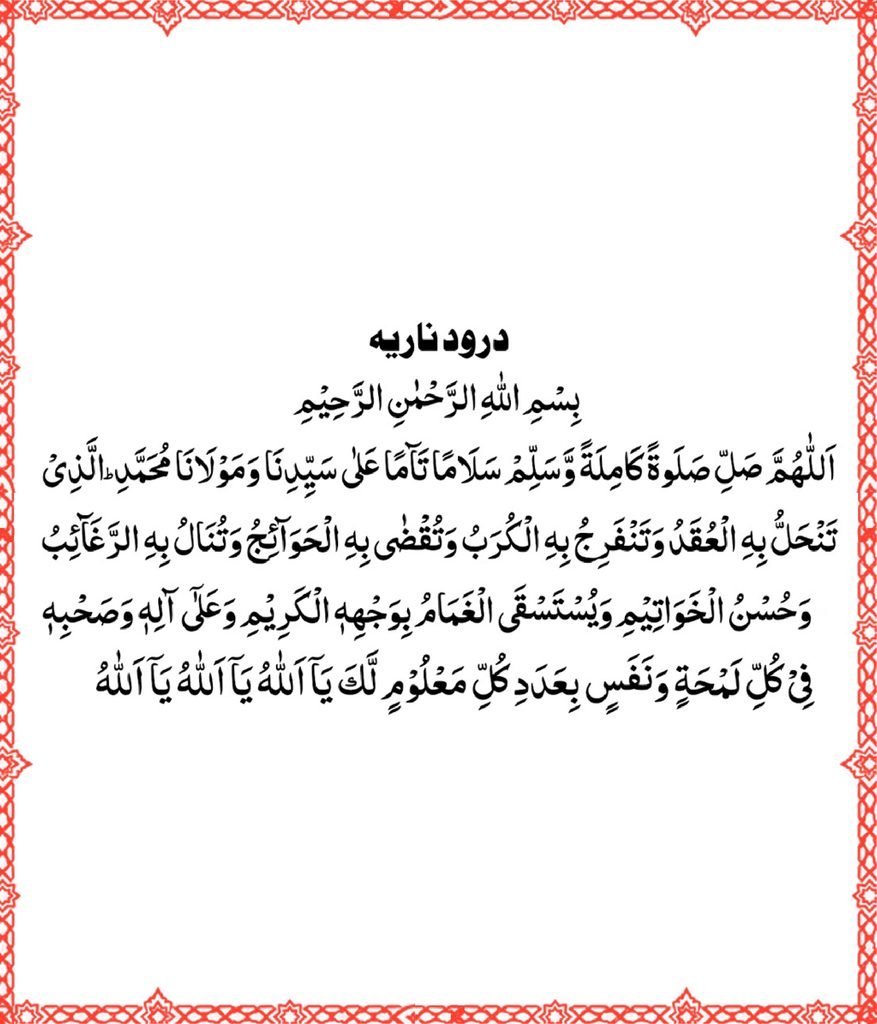
The following is a commonly circulated version of Durood Nariyah. Please compare it carefully with your supplied image before publishing, as I could not verify the exact wording in your uploaded source.
بِسْمِ اللَّهِ الرَّحْمَٰنِ الرَّحِيمِ
اللَّهُمَّ صَلِّ صَلَاةً كَامِلَةً وَسَلِّمْ سَلَامًا تَامًّا عَلَى سَيِّدِنَا وَمَوْلَانَا مُحَمَّدٍ الَّذِي تَنْحَلُّ بِهِ الْعُقَدُ وَتَنْفَرِجُ بِهِ الْكُرَبُ وَتُقْضَى بِهِ الْحَوَائِجُ وَتُنَالُ بِهِ الرَّغَائِبُ وَحُسْنُ الْخَوَاتِيمِ وَيُسْتَسْقَى الْغَمَامُ بِوَجْهِهِ الْكَرِيمِ وَعَلَى آلِهِ وَصَحْبِهِ فِي كُلِّ لَمْحَةٍ وَنَفَسٍ بِعَدَدِ كُلِّ مَعْلُومٍ لَكَ يَا اللَّهُ يَا اللَّهُ يَا اللَّهُ
Durood Nariyah Transliteration
Allahumma salli salatan kamilatan wa sallim salaman tamman ‘ala sayyidina wa mawlana Muhammadin alladhi tanhallu bihil ‘uqadu wa tanfariju bihil kurabu wa tuqda bihil hawa’iju wa tunalu bihir ragha’ibu wa husnul khawatimi wa yustasqal ghamamu bi wajhihil karimi wa ‘ala alihi wa sahbihi fi kulli lamhatin wa nafasin bi ‘adadi kulli ma‘lumin laka ya Allah, ya Allah, ya Allah.
Transliteration can vary slightly depending on how Arabic sounds are represented in English letters. Reading the Arabic, when possible, can help preserve the pronunciation.
Durood Nariyah Meaning in English
The general meaning of Durood Nariyah is:
“O Allah, send complete blessings and perfect peace upon our master and leader Muhammad, through whom difficulties are described as being untied, hardships relieved, needs fulfilled, hopes attained, and good endings granted. Rain is sought through his noble countenance. Send blessings and peace upon his family and companions at every moment and with every breath, according to the number of all things known to You.”
This is an explanatory translation of the commonly circulated wording, rather than a word-for-word scholarly translation.
The passage expresses respect for the Prophet ﷺ and refers to relief, hope, and the fulfilment of needs. These ideas should be understood within the belief that Allah is the ultimate source of help and mercy.
Why Do People Recite Durood Nariyah During Difficult Times?
Life can bring worries that are difficult to explain to others. A person may be concerned about family, work, finances, relationships, or an uncertain future. During such moments, remembrance of Allah and sending Salawat upon the Prophet ﷺ can be part of a person’s spiritual routine.
People often turn to Durood Nariyah for several reasons.
1. To Maintain Hope During Hardship
The wording mentions the easing of difficulties and the relief of distress. For many readers, these themes offer a reminder to remain hopeful and continue asking Allah for help, even when a situation feels overwhelming.
2. To Express Love for Prophet Muhammad ﷺ
Sending blessings upon the Prophet ﷺ is a meaningful act of devotion for Muslims. Reciting Salawat allows a person to remember his status and renew their connection with his teachings.
3. To Include Salawat in Daily Remembrance
Some people make Durood Nariyah part of their daily routine. Others recite it during a difficult period or when preparing to make dua. The most important consideration is to approach worship sincerely rather than treating recitation as a guaranteed formula for obtaining a particular outcome.
4. To Reflect on the Meaning of Its Words
The Durood refers to worries, needs, hopes, and good endings. Taking time to understand these themes can make recitation more thoughtful instead of simply repeating the words without considering their meaning.
Is There a Fixed Recitation Count for Durood Nariyah?
One common question is how many times Durood Nariyah should be recited. Different communities and devotional traditions mention different numbers, including 11, 41, 100, or 4444 repetitions.
However, these counts should not automatically be presented as a universally established requirement. A particular number does not guarantee that a problem will be solved or that a wish will be fulfilled.
If you follow a specific religious teacher or established devotional practice, you can ask them about its source and guidance. Otherwise, you may recite Salawat as part of your regular worship without believing that one particular count is compulsory.
Consistency, sincerity, understanding, and following sound religious guidance are more important than making unsupported promises about numbers.
How to Include Durood Nariyah in Your Daily Routine
If you want to make Durood Nariyah part of your routine, keep the practice manageable and sincere.
- Choose a convenient time: You might recite it after salah or during a quiet part of your day.
- Learn the pronunciation: Use a reliable Arabic text or listen to a trusted recitation if you need help with pronunciation.
- Understand the meaning: Reflect on the words about hardship, hope, and good endings.
- Make dua to Allah: Ask Allah directly for guidance, patience, ease, and what is best for you.
- Continue taking practical steps: Spiritual devotion can accompany responsible action, seeking advice, and addressing the problem in front of you.
There is no need to make a routine so demanding that it becomes difficult to maintain. Choose a practice that fits your circumstances and follow reliable religious guidance when you have questions.
Does Durood Nariyah Guarantee That a Wish Will Come True?
No particular recitation should be advertised as a guarantee that a specific wish will be fulfilled. Muslims may recite Salawat and make dua with hope, but the outcome remains with Allah.
A person may receive the help they asked for, find a different path, or need to remain patient while circumstances develop. It is better to approach Durood Nariyah as an act of worship and a means of remembering Allah, rather than as a transaction that guarantees a particular result.
Frequently Asked Questions About Durood Nariyah
What is Durood Nariyah recited for?
Many Muslims recite it as Salawat upon Prophet Muhammad ﷺ and associate its wording with asking Allah for ease during hardship, relief from worries, and the fulfilment of needs.
Can I recite Durood Nariyah every day?
People do include it in their daily devotional routines. You can follow a regular practice that is appropriate for you, while seeking reliable religious guidance about any specific claims or prescribed methods.
Can I recite Durood Nariyah when I have a problem?
You may include Salawat in your worship and make dua to Allah for help, patience, and guidance. It is also sensible to take practical steps to address the difficulty.
Is Durood Nariyah the same as Durood Ibrahim?
No. They are different forms of Salawat. Durood Ibrahim is well known as the form recited during salah, while Durood Nariyah is another widely circulated devotional formula.
You can also read our guides to Durood e Ibrahimi and Durood e Taaj to learn about other forms of Salawat.
Is a specific number of repetitions compulsory?
Different devotional traditions mention different counts. Do not assume that one count is compulsory for every Muslim or that completing it guarantees a particular result. Ask a knowledgeable scholar if you need guidance about a specific practice.
Conclusion
Durood Nariyah is a form of Salawat that many Muslims turn to as part of their devotional lives, particularly when reflecting on hardship, hope, and the need for Allah’s help. Its words encourage reflection on difficulties, personal needs, and the hope for a good ending.
When reciting it, take time to understand its meaning and maintain sincerity in your worship. Make your requests directly to Allah, seek trustworthy religious guidance when needed, and remember that no specific recitation count guarantees a particular outcome. The purpose is not simply to finish a number of repetitions, but to worship with understanding, respect, and hope in Allah’s mercy.